
If you’ve ever flown, you’ve probably noticed this scene: flight attendants sit upright, hands flat on their thighs, heads slightly tilted forward, and feet firmly planted on the ground. But what’s really behind this posture, which is often copied without understanding its meaning? Spoiler: it’s far from simply symbolic…
A gesture that can change everything in an emergency
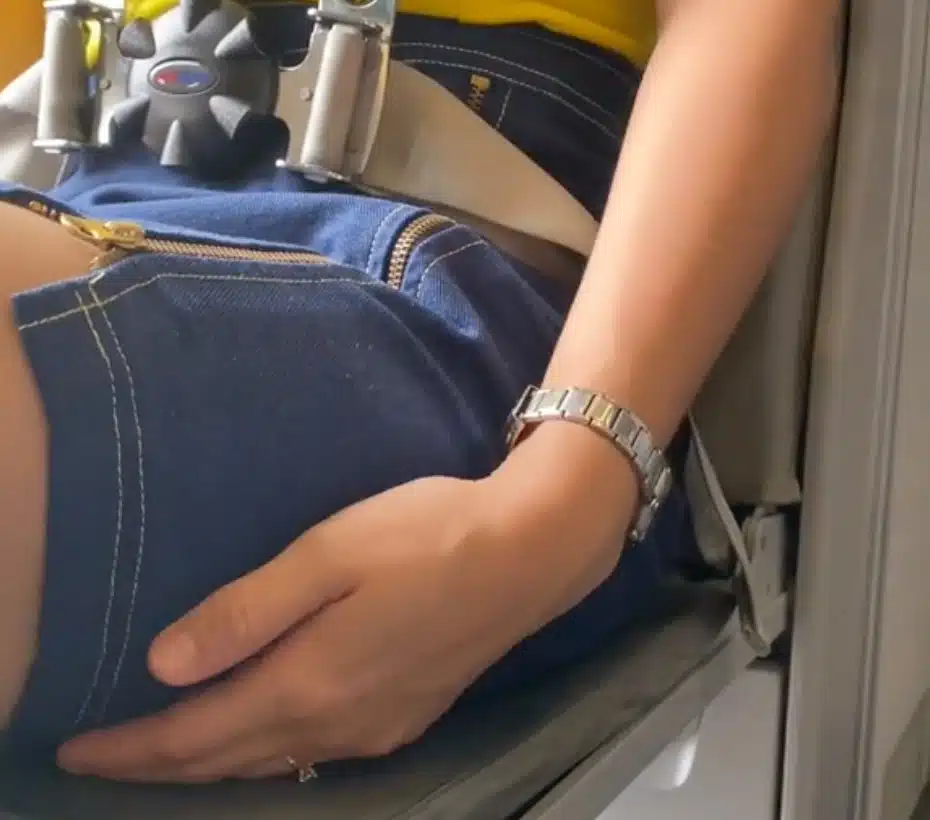
During the most critical phases of flight – takeoff and landing – every second counts. The so-called safety position adopted by crew members is intended to maximize body protection in the event of an impact.
Concretely, it consists of:
- Sit upright in your seat
- Buckle up properly
- Place your hands flat on your thighs, thumbs tucked inwards
- Relax your arms, without crossing them
- Keep your feet flat on the ground
This posture is not just for aesthetic reasons. It significantly limits involuntary movements during a hard landing and reduces the risk of injury . By keeping the limbs close to the body and the head in a protected position, it acts as a natural protection against shock.
An instruction validated by international experts
It’s no coincidence that this posture is taught in every airline around the world. Organizations like the FAA (Federal Aviation Administration) have conducted research demonstrating its real effectiveness .
It is designed to protect the most vulnerable parts of the body – particularly the head and limbs – by positioning them in such a way as to limit their exposure to the hard surfaces of the cabin . In the event of sudden deceleration, this can mean the difference between a fright and significant trauma .
A moment of calm… to react better afterwards
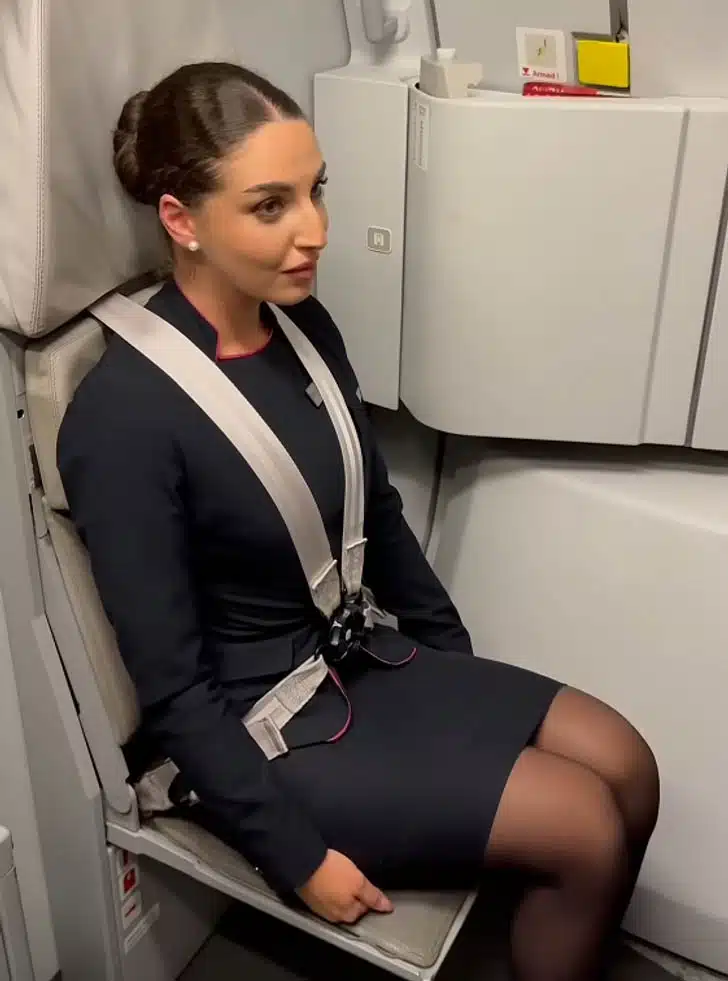
But that’s not all. This brief moment, during which the flight attendant adopts this posture, is also a moment of “silent reflection .” Behind this poetic expression lies a well-oiled mental routine : the crew members take the opportunity to refocus, mentally review evacuation procedures, anticipate possible emergency scenarios, and visualize their actions .


0 Comment:
Post a Comment